
In the modern world, maximum use of natural-physiological possibilities in animal reproduction is one of the most important problems of animal husbandry and a necessary condition for successful reproduction.
Reproduction - re-production, production again, the ability to create a function of reproduction. Accordingly, the performance of this function is assigned to the reproductive system. The reproductive system of agricultural animals consists of two systems with different morphologies, the reproductive systems of female and male cattle. Only biologically mature animals have the ability to reproduce.
The reproductive system of the body is under the influence of a complex organized system, which includes five hierarchical components: cortical nuclei, hypothalamus, pituitary gland, peripheral endocrine glands and "target" organs (vagina, uterus, ovaries, etc.).
Hypothalamus is a cluster of nuclei in the brain, which is the control organ of the endocrine system. It synthesizes gonadotropin-releasing hormones, thereby stimulating the pituitary gland.
Pituitary gland is an endocrine gland located in the brain and produces important biologically active substances, the so-called hormones, which, after being released into the circulation, reach the target organs and perform physiological functions. In the pituitary gland, gonadotropins are produced and released: 1) malutheinizing hormone – causes ovulation/release of an egg in the ovaries and promotes the transition and growth of the developed follicle into the corpus luteum; 2) Follicle-stimulating hormone - promotes ovarian development, follicle maturation and egg preparation for fertilization. It also causes an increase in the concentration of the hormone estrogen.
Ovaries – a pair of organs with two distinct functions: hormone production (estrogen, progesterone) and egg production (follicle maturation, ovulation, release of mature egg). Estrogen - they are synthesized in ovarian cells, corpus luteum and placenta under the influence of follicle-stimulating hormone. It ensures the course of the sexual cycle. Progesterone - contributes to the normal course of pregnancy and plays a major role in the process of preparation for the implantation of the fertilized egg by the uterine mucosa.
Uterus - consists of the body of the uterus and the cervix. The uterus has the following functions: discharge (flow of mucus from the genital tract), carrying the fetus and expelling the fetus during childbirth.
After a thorough study of the endocrine system by scientists, they began to develop specific schemes and hormonal drugs to influence the reproduction of cows, which was successfully achieved. Hormones regulate reproductive development. Researchers who study how hormones work at the cellular level often call them "gate openers," meaning that hormones help cells conduct or receive nerve signals.
The process of intercourse involves a limited period and certain days. The success of artificial insemination depends a lot on the accurate detection of the onset of heat and the correct selection of the time for insemination. In order to determine the optimal time of insemination of furs and sexually mature deques, it is necessary to take into account the physiological changes at different stages of the sexual cycle, which take place during power, excitement, estrus (sexual desire) and ovulation. All these stages of the sexual cycle have their own characteristics. It is important to know that the characteristic signs of inbreeding are not infrequently weak and often lead artificial insemination technicians to make mistakes, resulting in missed inbreeding and infertile cattle.
Intensive breeding is an effective way to improve fertility in livestock breeding. To achieve this, the best way to fertilize animals is to synchronize sexual intercourse.
The main purpose of sexual intercourse synchronization is:
Fertilization of a group of animals together in one period of time;
calving in one period of time, according to groups of animals;
reducing the interval between births;
Solving problems in cows that have not come into heat independently for a long time;
reduction of discharge caused by infertility;
Changing the seasonality of births.
Cows with normal ovaries and uterus are allowed for synchronization. The heating synchronization method can be used only by a veterinarian who can assess the morpho-functional state of the uterus and ovaries of cattle by using the transrectal palpation method. The process of preparation for synchronization includes selection of animals, assessment of their physiological condition, preparation of necessary drugs and sperm. It is determined as the optimal time of artificial insemination
Enzaprost - (ENZAPROST) - active substance dinoprost. description -
stimulates the corpus luteum in the ovaries, which is followed by estrus (the manifestation of sexual desire) and ovulation (the phase of the rupture of the mature follicle and the release of the egg);
It has a strong stimulating effect on the smooth muscles of the uterus.
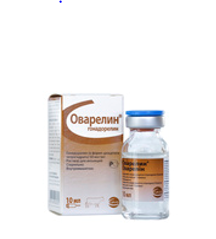
OVARELIN - as an active substance, is gonadorelin - a synthetic analogue of gonadotropin-releasing hormone. Gonadorelin stimulates the synthesis and secretion of pituitary gonadotropins, malutheinizing and follicle-stimulating hormones.
Characterization - Ovarelin is used for the regulation of reproductive function in cows and sexually mature heifers:
for the treatment of delayed ovulation;
for the treatment of follicular cyst;
for the treatment of ovarian hypofunction during infertility;
For synchronization of estrus.
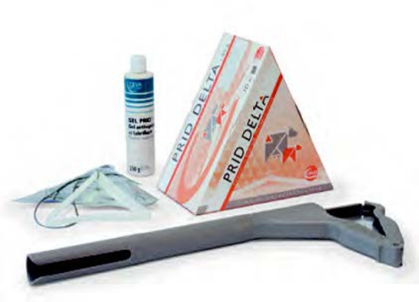
Prid Delta - (PRID DELTA)- is progesterone as an active substance and is injected intravaginally through an applicator, used in combination with dinoprost. description -
Progesterone regulates the sexual cycle, prepares the body for fertilization and pregnancy;
Progesterone prepares the uterus for the implantation of the embryo and subsequently ensures the preservation of the placenta;
Progesterone enhances the secretion of gonadotropin-releasing hormones. Accordingly, the secretion of hormones (maluteinized and follicle-stimulated) stimulates the synthesis of estrogens, and the peak concentration initiates estrus and ovulation.
In modern practical veterinary medicine, new technologies are successfully used, which is undoubtedly an indicator of progress, but it is necessary to use these technologies correctly and correctly interpret the obtained results.
Gurami Melkadze
Company "Inveti" Mt. consultant
Academic doctor.