Composition:
Fundamine sterile solution for injection containing 82.95 mg flunixin meglumine equivalent to 50 mg flunixin base. Each ml also contains sodium formaldehyde sulfoxylate and sodium tetraacetic acid ethylenediamide as antioxidants.
Target animals:
Cattle, horse.
Indications:
Horse: To relieve pain associated with musculoskeletal disorders, inflammation and colic.
Cattle: To relieve symptoms of acute inflammation associated with respiratory diseases.
Route of administration and dosage:
Intravenous administration should be done slowly and the temperature of the product should be equalized to body temperature before administration. Rapid intravenous injections are dangerous. Intra-arterial administration is not allowed.
Horses: For the relief of inflammation and pain in musculoskeletal conditions, the recommended dose is 1 mg flunixin/kg body weight/day intravenously, equivalent to 1 ml/50 kg body weight per day, given for 1-5 days. The recommended dose for colic in horses is 1 mg flunixin/kg bw/day intravenously, equivalent to 1 ml/50 kg bw/day. During colic, the treatment can be repeated once or twice.
Cattle:
The recommended dose is intramuscularly or intravenously 2 mg of flunixin/kg of body weight/day, which is equivalent to 2 ml of the medicine taken per 50 kg of live weight, the course is 1-3 days. It is not allowed to enter more than 20 ml of injection solution at one injection site.
Special clinical information and precautions for target animals
The cause of the underlying inflammatory condition or colic should be determined and concomitant therapy planned accordingly.
Use in animals less than 6 weeks of age or in older animals may carry additional risks. If such use is necessary, careful clinical management of the animal should be performed. Avoid use in dehydrated, hypovolemic, or hypotensive animals except in cases of endotoxemia or septic shock. Before complete recovery, it is preferable that non-steroidal anti-inflammatory drugs that inhibit the synthesis of prostaglandins are not administered to animals under general anesthesia. Rarely, fatal shock may occur after intravenous administration of products containing propylene glycol. The medicine should be administered slowly and the temperature of the medicine should be equal to the body temperature. In case of intolerance, the drug should be stopped and, if necessary, anti-shock therapy should be administered. Due to its anti-inflammatory effect, it can mask clinical signs and, therefore, possible resistance to the used antibiotic can be overlooked. Use immediately after delivery can cause complete retention of the placenta by inhibiting uterine involution and separation of fetal membranes. Products containing NSAIDs may inhibit phagocytosis, and therefore it should be considered that appropriate antimicrobial therapy may be necessary to treat bacterial infections associated with inflammation.
Use during pregnancy and lactation:
Laboratory animal studies have shown that oral administration of flunixin at fetally toxic doses in rabbits and rats and intramuscularly in rats caused fetotoxicity and increased gestational age. Safety of the product has not been established in foals, calves and mature bulls, therefore it should not be used in these animals. Its safety has been proven in cattle, mice and rats. In these animals, it should not be used 48 hours before parturition. (See the section - Contraindications and side effects) The product can be used 36 hours after delivery, after a risk/benefit assessment by the veterinarian, and the risk of placental retention should be taken into account (the product increases the retention rate).
Side effects:
Adverse effects for this class of drugs include gastrointestinal irritation, ulceration, and an increased likelihood of kidney damage in dehydrated or hypovolemic animals. After rapid intravenous injection in horses and calves, collapse has occasionally occurred. As with other NSAIDs, rare or idiosyncratic hepatic or renal side effects may occur. In case of side effects, the drug should be stopped and the veterinarian should be consulted again. This can cause changes in blood levels.
Intravenous use in horses may cause diarrhea and bloody stools.
When used intramuscularly in horses and cattle, a local reaction at the injection site may occur. The product has a tocolytic effect by inhibiting the synthesis of prostaglandins responsible for the initiation of labor, so it may delay labor or increase the risk of miscarriage.
Rapid intravenous administration may cause collapse. See warnings in section - Use during pregnancy and lactation.
Interaction with medicines:
Do not take other non-steroidal anti-inflammatory drugs at the same time within 24 hours. Some NSAIDs can bind strongly to plasma proteins and compete with other similar drugs, which can lead to toxic effects. Flunixin enhances the action of warfarin and other drugs that bind to plasma proteins. Therefore, this should be taken into account when prescribing concomitant therapy. Should not be used with corticosteroids due to increased toxicity of both products and potential for gastrointestinal ulceration.
Flunixin can reduce the effect of some antihypertensive drugs, such as diuretics (angiotensin-converting enzyme inhibitors), angiotensin-converting enzyme inhibitors and beta-blockers by inhibiting the synthesis of prostaglandins.
It should not be administered with other potentially nephrotoxic drugs, especially aminoglycosides. Flunixin can increase the toxicity of some drugs, such as aminoglycosides, due to inhibition of their renal excretion.
Overdose and antidote:
Flunixin is a non-steroidal anti-inflammatory drug. Overdose especially causes damage to the gastrointestinal tract. Ataxia and incoordination may occur. In horses, a transient increase in blood pressure may occur if 3 times the recommended dose (3 mg/kg body weight) is exceeded when administered intravenously. No side effects were observed when intravenous administration of 3 times the recommended dose (6 mg/kg) was exceeded in cattle.
Waiting period:
Cattle:
Meat:
31 days (after intramuscular injection)
10 days (after intravenous injection).
Milk:
36 hours (after intramuscular injection)
24 hours (after intravenous injection)
Contraindications:
Do not give to animals with chronic diseases of the musculoskeletal system. Do not administer to animals with liver, kidney or heart disease.
Do not apply to animals with digestive system injuries (such as ulcers, bleeding).
Do not use in animals with hemorrhagic disease.
Do not use on animals that are sensitive to any substance included in the preparation or other non-steroidal anti-inflammatory drugs.
Do not use in colic associated with dehydration and obstruction (intestinal obstruction). Do not use in cows 48 hours before expected parturition, otherwise there is a risk of cessation of lactation. Don't use mace in face masks. For information on use during pregnancy, lactation and ovulation, see the warnings section.
General warnings:
Consult a veterinarian before use and in case of unexpected side effects.
Keep out of reach of children.
Special precautions for those administering the veterinary medicinal product to animals:
The product may cause hypersensitivity reactions. People sensitive to anti-inflammatory products should not use this product. Incompatibility reactions can be serious. In case of contact with the skin, the area of contact should be washed with soap and plenty of water. If symptoms persist, seek medical attention. In case of contact with eyes, rinse with water and consult a doctor. To avoid taking the product orally, do not eat or drink anything during the application process, wash your hands after the procedure. If accidentally swallowed, seek medical advice. In case of accidental injection, consult a doctor, take the package label and leaflet with you.
Storage conditions and term:
Store in original packaging in a refrigerator below 25°C. Do not freeze. The shelf life is 3 years. The shelf life after the first opening of the package is 28 days. Store in a place protected from light. It is allowed to pierce the cork only 20 times.
Special precautions for the disposal of unused veterinary medicinal products or waste products derived from the use of such products:
Any unused product or waste material should be disposed of in accordance with good pharmaceutical waste disposal practices and national waste disposal regulations.
Commercial packaging:
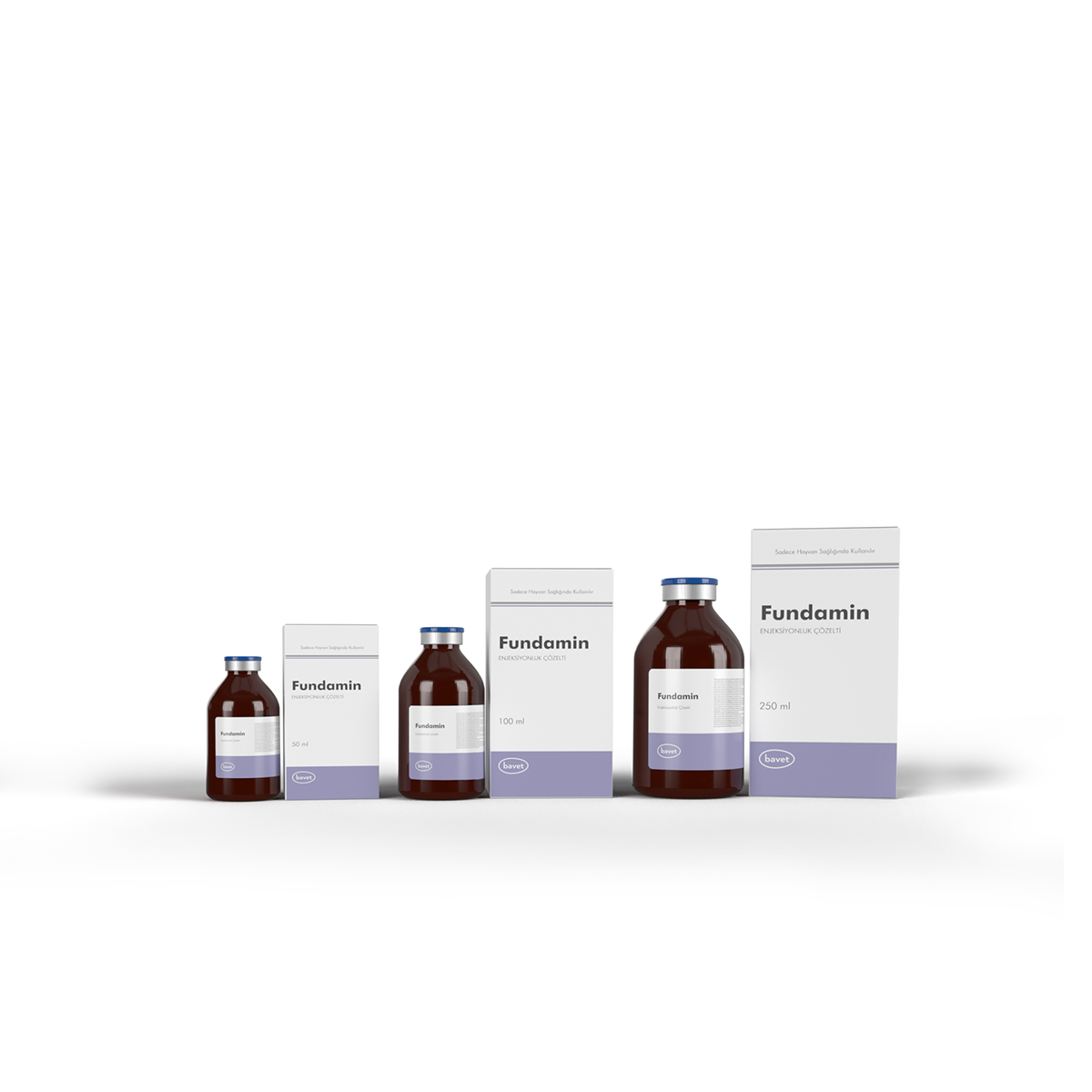
50 ml, 100 ml and 250 ml type II amber glass vials with a gray bromobutyl stopper and a blue cap.
Marketing Authorization Holder:
Bavet İlaç San. ve Tic. A.Ş.
İstanbul Tuzla Organize San. Bölgesi (ITOSB) 12. Cad. No.8 34959 Tepeören, Tuzla Istanbul /Turkey
Manufacturer:
Arion İlaç San. Tic. A.Ş. İstanbul Tuzla Organize San. Bölgesi (ITOSB) 12. Cad. No.8 34959 Tepeören, Tuzla Istanbul /Turkey
Importer in Georgia:
Invet Ltd. 404387481, Georgia, Tbilisi, 0154, Vakhushti Bagrationi st. N84a (032) 2 25 19 66